‘The Life and Deaths of Wilson Shedd’ Review: Amanda Seyfried and Scoot McNairy Bring Raw Intensity to Tim Blake Nelson’s Death Row Drama
One of the principal takeaways from Tim Blake Nelson’s bruising drama set in and around a maximum-security Oklahoma prison, The Life and Deaths of Wilson Shedd, is how infrequently we get to see Scoot McNairy in a meaty lead role that gives the reliably great character actor real complexity to chew on. McNairy plays a death row inmate who forms a connection with the equally compelling Amanda Seyfried’s creative writing teacher, a woman stuck in an abusive marriage and grasping to find a way out. There’s ambiguity in both characters’ choices, making for a tough film that refuses to provide easy answers.
Nelson took 12 years to get the project made, and that labor-of-love aspect shows in the soulfulness and meticulous care the writer-director brings to this unsettling story of violence begetting violence, based on actual events. He gathers what seems a hand-picked cast of excellent actors to breathe texture and authenticity into a drama that’s not an easy watch but should find an appreciative audience on streaming platforms.
The Life and Deaths of Wilson Shedd
Grim but riveting.
Cast: Amanda Seyfried, Scoot McNairy, Missi Pyle, Devyn Tyler, Elizabeth Marvel, Tim Blake Nelson, Grant Harvey, William Jackson Harper, Wunmi Mosaku
Director-screenwriter: Tim Blake Nelson
2 hours 1 minute
Nelson doesn’t shy away from the horrific brutality at the heart of the film but nor does he sensationalize it in the interest of amping up the material into a crime thriller. The movie is notable for its thoughtful approach to themes more often explored via heightened emotions. Nelson’s measured handle on the drama gives it an imposing gravity. The seemingly counterintuitive backing of a delicate, predominantly acoustic guitar score by Henry Nelson and Will Curry places the film in the American heartland and signals from the start that the focus will be more psychological than action-driven.
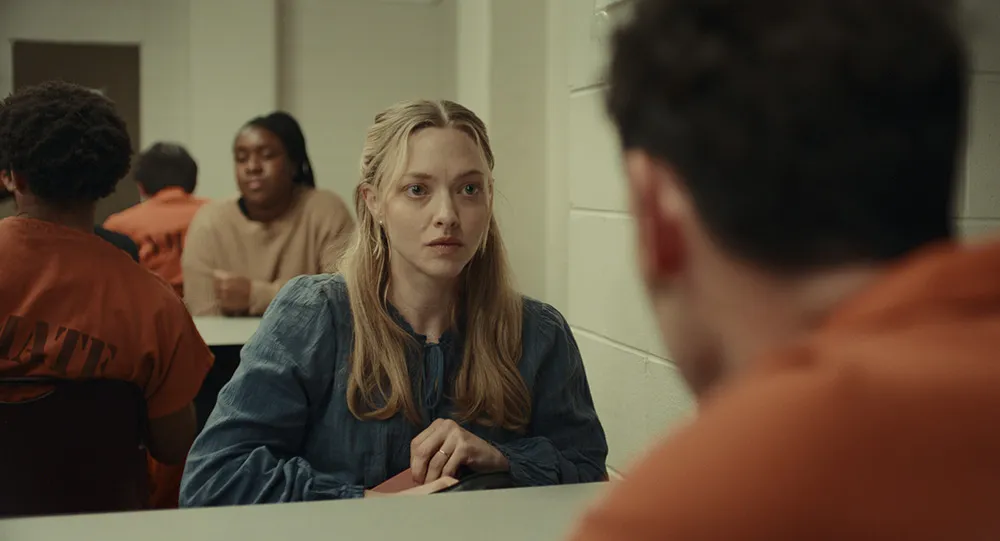
Seyfried plays Karen, recently returned to her hometown to be near her father, who has dementia and has been placed in an elder-care facility, which she has to pay for given that her brother is in prison. With high school teaching positions in short supply, she takes a spot teaching a group of a dozen or so inmates at a men’s prison, starting them off with a Hemingway story. Karen encourages the students to write something personal and is surprised to get back a beautifully shaped piece of prose from Wilson, recounting a childhood episode when he was hunting squirrels in the woods and the complicated way it made him feel about the act of killing.
Nelson, who also appears as the prison warden, builds the film along three parallel timelines, detailing Karen’s prison classes, which become a strange kind of respite from her miserable time at home with Kenneth (Grant Harvey), her deadbeat drunk of a husband; Wilson’s escape with two other men and the shocking incident that adds a handful more deaths to the grisly murder conviction that put him away; and the ticking clock as senior state prison warden Joan Gardner (Missi Pyle) oversees preparations for the execution of an inmate by lethal injection, to be supervised by a specialized medic (Elizabeth Marvel).
This ambitious tripartite structure comes with strengths and weaknesses. It gives the drama a disturbing sense of human beings’ capability for heartless violence, keeps us on edge and shakes up our perspective by intercutting sympathetic scenes with chilling ones. But it also makes for an initial challenge in figuring out where the three timelines sit in relation to each other. This is somewhat detrimental to the development of Karen, since cutting back and forth interrupts the flow of her epistolary relationship with Wilson, whose stories morph into intimate letters.
Seyfried has no trouble putting across the desperation of a woman in an unendurable marriage, but the script rushes through the escalation of her exchanges with Wilson, making it harder to buy the degree to which she is willing to compromise herself by becoming an accomplice in his escape plan. Of course, the sad phenomenon of women falling under the spell of incarcerated men is well-documented, but some audiences might find themselves thinking Karen is too smart to be pulled in so deep.
Read more Madonna Set to Open MTV Video Music Awards for the First Time in Over 20 Years
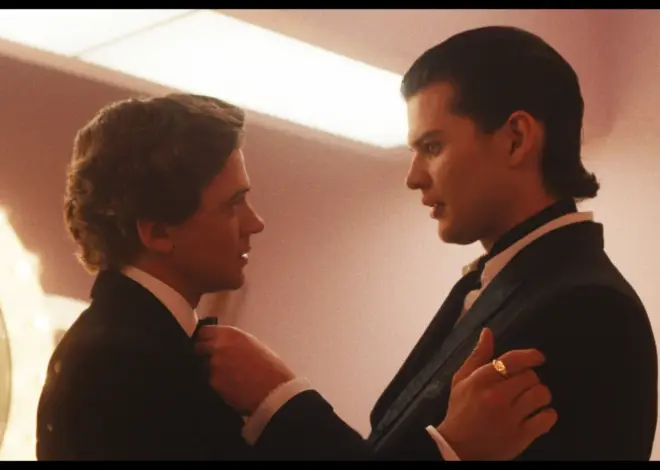
McNairy leans into the enigmatic side of Wilson. He has the voice of a richly expressive writer, implying sensitivity and humanity alongside his unquestionable intelligence, but also the coiled danger and volatility of an unrepentantly calculating killer.
Did he court Karen’s complicity from the start or did the plan coalesce in stages once the unexplained bruises and cuts on her face pointed to violence at home, exposing her loneliness and vulnerability? Putting his lean and sinewy physicality to disquieting use, McNairy makes Wilson both unreadable and coldly transparent, giving him equal parts menace and magnetism.
The most harrowing scenes follow an innocent family, John Lawson (William Jackson Harper), his wife Jane (Devyn Tyler) and their two sweet young kids. Jane’s belief in forgiveness crashes up against the far less categorical reality of a vicious world when the Lawsons are dropped into a situation of extreme terror. Harper and Tyler’s performances are heartstopping.
There’s expert work also from Pyle as a careworn law enforcement officer unable to remain indifferent to the taking of another life in the the name of the law. A terrific scene in which Joan unburdens herself of troubling thoughts resonates throughout the execution, which Nelson makes the effective choice to show in unflinchingly clinical detail. Like other death row dramas including Clemency, Just Mercy and Dead Man Walking, this film questions whether there’s really that big a difference between murderous cruelty and state-sanctioned capital punishment.
The one disappointment of the superb ensemble is that Sinners standout Wunmi Mosaku is given too little to do as a supportive friend to Karen, who takes her in when she’s forced to flee from Kenneth. But this is nonetheless a fascinatingly dark and uncompromising film that reaffirms Nelson’s standing as a vital force in American independent filmmaking for more than three decades.
Read more Rodney Charters, Cinematographer Who Shot Just About Every Episode of ’24,’ Dies at 80