John Turturro Was Given a Rare Leading Film Role. Now He’s in the Running for His First-Ever Oscar Nod
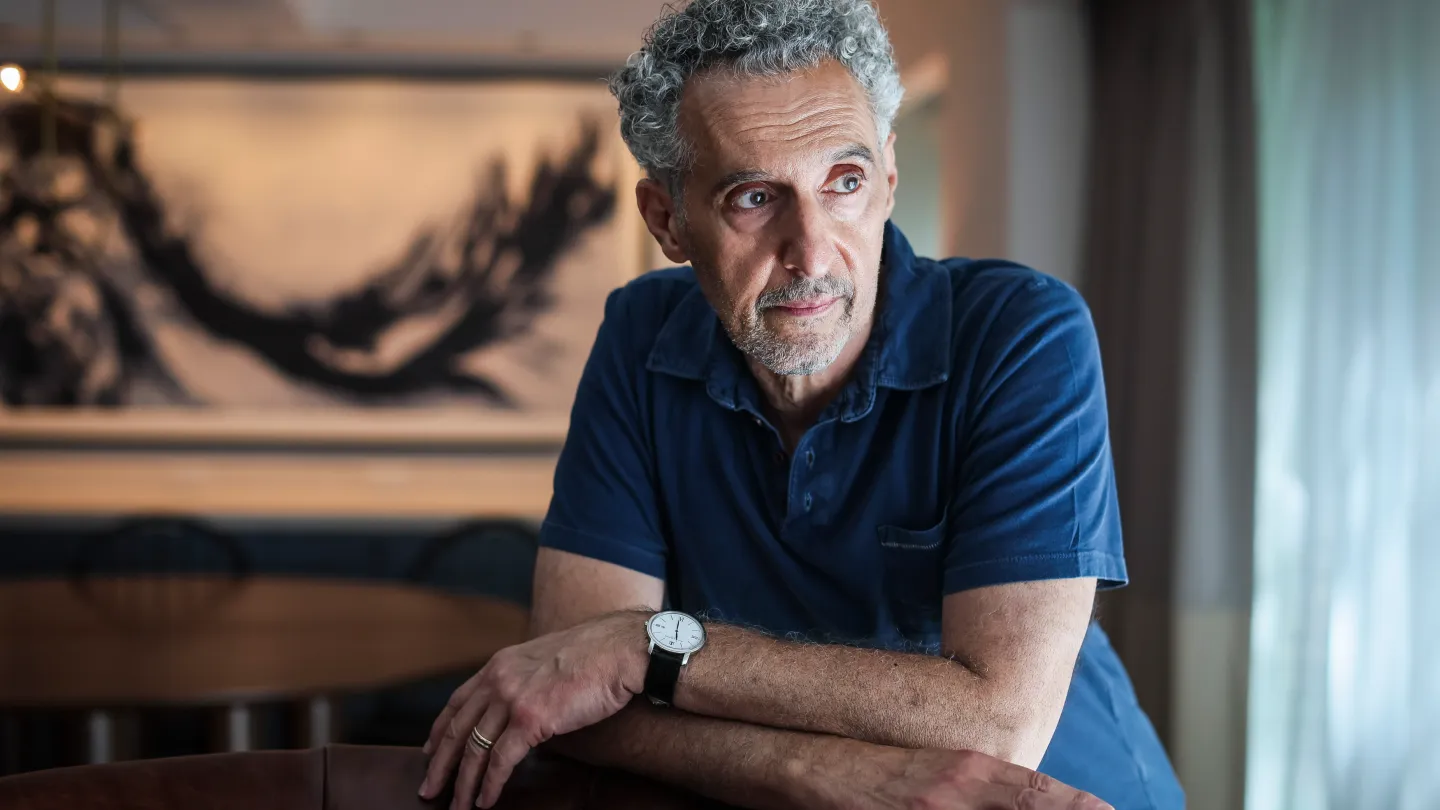
John Turturro has led a consistently rich, varied career on screens big and small, on stages around New York and beyond. The Brooklyn native, best known for ‘90s collaborations with the Coen brothers like Barton Fink and The Big Lebowski and more recently for Emmy-nominated TV work in The Night of and Severance, has long been the kind of consummate character actor who elevates any project, no matter the role’s size. He’s also a workhorse. Over Zoom on the last day of August, the actor was in the thick of a demanding run of the play Rhinoceros at the American Repertory Theater in Cambridge, Mass., starring opposite Paul Giamatti and Tatiana Maslany.
Read more Series Based on Rick Riordan’s ‘Kane Chronicles’ in the Works at Disney+
“It’s a bear when you’re on stage,” he says. “It’s very physical. Very, very physical.”
The occasion for my chat with the 69-year-old actor, though, is what’s become an awfully, absurdly rare thing in his filmography: a true lead role in a film. In fact, by my count after speaking with him, the last time Turturro was cast as the lead in a movie — which is to say, not in a project he directed or developed — was 30 years ago, in Tom DiCillo’s indie buddy comedy Box of Moonlight. The streak is broken, gloriously, with The Only Living Pickpocket in New York, Noah Segan’s textured crime thriller that debuted to raves at Sundance, and is now playing fall fests like Telluride and Toronto ahead of a hopeful awards campaign for Turturro — who has never been nominated for an Oscar. Sony Pictures Classics is putting it in theaters on Oct. 23.
The film stars Turturro as Harry Lehman, who’s made a fairly stable, communal life of petty theft around the five boroughs of New York City. He has mastered the subtle art of a wallet or watch grab and has his allies both in law enforcement (repped by Giancarlo Esposito) and the pawn-shop world (Steve Buscemi) to facilitate the lifestyle. But as the film depicts, in a New York now overwhelmed by surveillance cameras and cashless payments and dramatic wealth disparities, it’s a dying art — one that may reflect something greater that the city is losing. Turturro carefully, movingly embodies all of that in one of his richest big-screen turns to date.
Indeed, the walls start closing in on Harry as the film begins, and over a tense 36 hours, he’s left to reflect on past mistakes and how he’d like to leave things — should he be reaching the end of the road. On the eve of Only Pickpocket’s fall premiere in Telluride, we spoke about this film marking a thrilling new chapter in a singular career.
You’re off to Telluride, then Toronto, with this movie, which indicates how much people are responding to it. I’m curious how you responded to it.
I loved the script when I read it and hit it off with Noah. We spent, I would say, about four months talking about it. He shared a lot of his research. And I found a guy, Apollo Robbins, a magician pickpocket, and he was really helpful. I had friends of mine, Giancarlo, who I haven’t worked with in years, and Steve Buscemi, and then we got Tatiana [Maslany]. It was one of those really great experiences.
It just was a very collaborative experience. When you only have five weeks to shoot, we had 26 days or something like that to do it, you have to really be in sync. You don’t normally have that. You never know. There was a delicacy to the script that I was hoping to embody. I really enjoyed working on it so much, and I was appreciative to have a beautiful part like that.
Noah has said that you were the only guy to do this, so I’ll flip this to you this way: Why do you think he thought that? What about your filmography, your career, made you an ideal fit for this part?
I guess I’m not from the world of pickpockets. (Laughs.) Maybe there’s the essence of who you are or what makes you as a human being, and that’s important. He thought I would be the right person to embody this. And that’s a big gift when someone gives you that, you know what I mean? It could relate maybe with one or two other things I’ve done, but it was different enough. The whole analog world is something that I grew up in, and I understand how it is to adjust to a modern world and how some people just can’t. We’re seeing this in the world too — people losing their jobs, being replaced, all kinds of things. There’s an honor code within him being a thief, but he lives in this particular world.
It just spoke to me. And I guess Noah had that inkling that I would be the right fit for him. And it just seemed like we worked hand in glove together that way. There’s a humanity to his script and how people care about other people and do things that are not in a technological world. And my father was a builder, for example; he worked as a carpenter. I was around a lot of people who worked with their hands. It’s very different when you have a job where you have to use your body. I mean, I’m doing it right now on stage. And it was about aging. There’s a lot of interesting themes that he has embedded in it, and it’s your job to realize that and to make it fully as human as it can be.
What was the biggest challenge for you here?
To keep the trajectory through the whole thing. It takes place in, what, 36 hours? You do your backstory, you do all that stuff — where the guy came from, where he wound up, and just keeping that — but I had to be like a samurai, very focused and keeping that in the day without it being oppressive to anybody else. You are carrying a knapsack on your back to survive. As you get older, you have a lot more things to draw on. We all draw from different sources of our lives — of what we’ve read, what we’ve seen, what we’ve learned — but that’s what it is when you do a movie. This is a very Aristotelian kind of structure. That was the challenge, I think: to find all the variations. I always think of music. A great piece of music has a lot of variation. It doesn’t assume that it has your attention. That’s a big thing in life, to keep your attention.
That’s probably especially true of a lead, right?
Yeah. I mean, I always think everyone is the lead in their own life. You’re the lead. So even if you’re playing a supporting character, you’re the lead as you’re coming in. But yes, if you’re the lead in a story, you have to hold the story within you.
I was trying to think of the last true lead you were cast in, in a movie — which is to say one you hadn’t directed or developed.
Read more Harry Daniels Is Done Singing at Celebrities (Maybe)
As far as a movie goes that I haven’t directed, I don’t know. I’d have to look. I mean, I did a bunch of them for a while, but then I don’t know. I’ve been doing more miniseries and things. Also, the nature of a lot of movies has changed. You don’t get as many independent or medium-sized films anymore, which I used to make my living on.
That was your space.
That was my space. I didn’t do those big films for years. This may sound like I’m being self-deprecating, but I don’t even think of it. I usually think, “Well, this is a really good role.”
Noah writes this part for you, and it is a true lead, so I imagine it felt significant just to be able to be thought of to anchor a film like this again, since as you say, it’s rare to find them at all.
Right, it has to do with the quality of the script. I’ve read plenty of scripts where people were like, “I want you to play this, it is the main character,” and it’s not good! So why am I going to do it? This one is beautifully written and it’s a beautiful part. When people have given me those kinds of roles, whoever it’s been — whether it’s been the Coen Brothers or Robert Redford or whoever — it’s like a gift. In this country, I learned early on that people can put you in a category. I could have just played bad guys when I first started. I really fought that tooth and nail, and I’m really glad. I do theater, and that also gives you a chance to work your muscles again all over and stretch and stretch.
But I agree with you. It’s a gift when someone gives you something like this to do. It’s not that I don’t think I can do it, just that sometimes you’re considered for something and maybe it goes to someone who’s a little more box-office friendly than you. When I was younger, that happened once or twice. And as you get older, you get less of those. And the interesting thing is that a lot of times as you get older, you actually can get better as an actor. You can improve. That is a wonderful thing to discover, like, “Oh, wow, I know how to be even simpler in that.”
Can you share some of those early projects that did not go your way?
Oh, no. (Laughs.) I can’t say that stuff. But those are times where really somebody wants you, but the studio wants somebody else. That’s just part of the gig. You can be hurt and then you’ve got to pick yourself up and do it. I think that makes you appreciate the other opportunities even more.
One thing that really struck me about this movie was its portrait of New York, and specifically New York today. There’s an odd melancholy in him reaching the end of the pickpocketing road, largely because of the way New York has changed in technology and culture. I associate you obviously as a New York actor, so what was it like shooting that kind of story in modern New York?
We were in the boroughs a lot, and there’s a reinvention that happens. There’s new groups that come in and replace the group that leaves. It’s a melting pot city. I don’t see how you could be a foreigner in New York. You can be from anywhere. So there are certain sounds that I grew up with which are a little different now, but I think that you are a part of the world when you’re walking down the street, taking the trains, bumping into people. There’s a kind of energy that it gives you, and I definitely miss that when I’m away. We shot in every borough, which is very hard to do. Sometimes we had to run and jump. We shot one day on a train — we were doing pickup shots and people were just on the train, and they didn’t even bat an eye. They’re just like, “Another day.” It definitely harks back to films of the ‘40s, film noir, and ‘70s — those people or actors that influenced me as a kid.
Not to say you were going around New York pickpocketing, but was there any level of immersive research for you in this?
Apollo Robbins has hands like a concert pianist. He can do anything with his hands. He can take your watch right off, right in front of your face, and you just don’t notice. He distracts you, and before you know it, it’s gone. So I was pickpocketing people that I wouldn’t get arrested with. (Laughs.) Not always successfully, but certainly on the crew, I did it all the time, trying to steal from people. Sometimes they work in teams and it’s about distraction, and it’s about the delicacy of a touch. And in a way, the film is that way. It’s about misdirection and with a delicate touch. When you read about these guys, they had a real-time slate. They would work every day, say 4 in the morning to 10. Usually the policemen let them do it. They would have permission.
Now nobody carries cash, but no one pays attention. When I would be on the subway, I would be like, “Wow, I could just go put my hand right in that person’s thing.” Maybe I would take their phone, but that’s a whole different thing. I would approach people sometimes thinking, like, “Well, I don’t want to get arrested.” But it was very interesting to be aware of what you could do and what you couldn’t do. Certain pockets are tighter. The other pockets used to be long ways on the side, inside of a coat you could put your hand in. But purses and knapsacks and saggy pants, you’re waiting to be picked.
There was something so lovely and familial about seeing you work with Giancarlo and Buscemi. What’s it like, especially when you are the lead, to share these rich scenes together?
It’s beautiful. They’re wonderful, great actors, beautiful. I mean, I’ve supported many people and been the cameo part, a really big supporting role. That’s what makes the world interesting. It’s what happens between us. It’s that space between people. That’s the joy of life. It’s wonderful when you can work with people like that. I mean, Tatiana came in for one day, and she was just amazing. I met her once, and I knew right away. I said, “Let’s not rehearse the scene. Let’s just block it and let’s just do it. I don’t want to rehearse it.” And she didn’t want to either, and she was amazing. In that one scene, you get basically their life together, and that’s really hard to do. And I’m working with her now [on stage], and she’s great. Then when you have Steve and Giancarlo, you have all that history between us. It’s like we don’t have to really act. We know each other.
Read more ‘Heated Rivalry’ Season 2 Adds Kevin Zegers, Paul Gross and Milla Jovovich