‘Donnie Darko’: THR’s 2001 Review
On October 26, 2001, writer-director Richard Kelly’s Donnie Darko opened in theaters following its Sundance Film Festival bow early in the year. The feature, starring Jake Gyllenhaal and Jena Malone, made just over $8 million globally. The Hollywood Reporter’s original review is below:
Read more Ava DuVernay Defends Using AI in New Doc ’14th’
Quick: What rhymes with “Darko”? “Bizarro,” “sicko,” “weirdo,” “nutso.” You get the idea of this film real fast from the tide, which is the good and bad news. Playing in the dramatic competition at this year’s Sundance Film Festival, Donnie Darko is the latest progeny of the alienated, upper-middle-class, private school-kid genre. In its dark depiction of the well-manicured suburbs, one feels the dark shadow of Kevin Spacey and a bouquet of dead roses hovering over this odd and bright offspring.
With its mix of teenage alienation, anti-authority diatribes and heaps of personality disorder, Darko is appealing in a kind of neo-Heathers, anti-establishment way. With blistering satirical slants and a steady mix of acidic jabs at middle-class life, Darko should be boffo among the teen and young adults segment as well as those viewers still plugged into a sophomoric self-identity.
A mixed bag genetically and qualitatively, Darko gyrates around the brooding downward spiral of its titular character, fusing together black comedy, paranormal activity and teenage angst. Ultimately, filmmaker Richard Kelly’s narrative bursts fizzle into a confusing meltdown, but along the way, it’s stoked with enough wiggy comedy and incendiary situations to keep its target teen audience straight up and satisfied. At its Sundance screening, there wasn’t merely a generation gap between the twentysomethings and elder thirtysomethings but more of a generational abyss as pockets howled with glee while others sat in stony, seen-it-before silence.
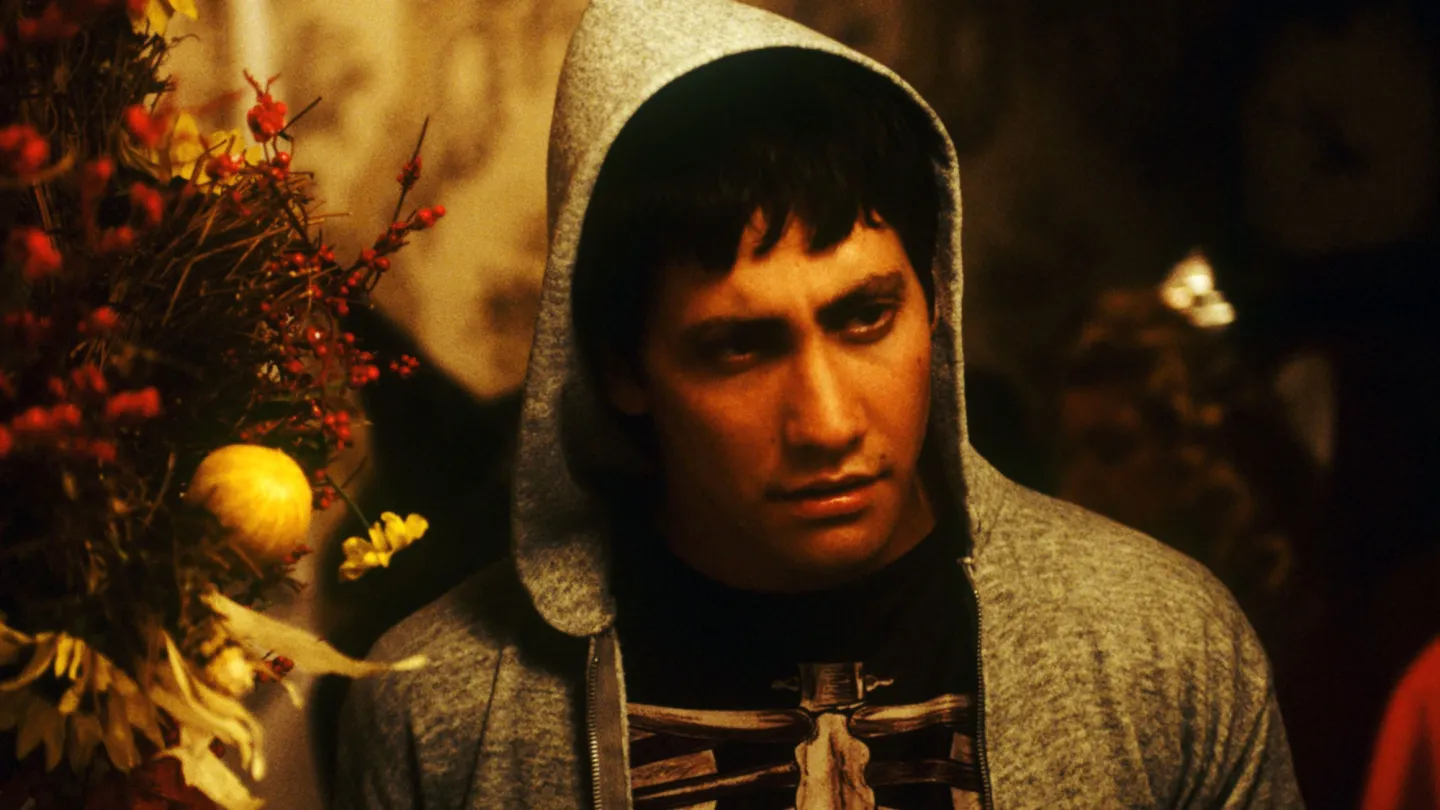
In this dare-to-be-wicked romp, dark-coiffed boy of privilege Donnie Darko meanders about in a medicated glaze. He’s bright (high Iowa test scores), talented and baffling to everyone: parents, teachers, friends and siblings. Donnie is a bit of a cherubic-looking Edward Scissorhands who, on one of his less sullen days, comes across as a charming, intriguing kid. But Donnie is terminally dark-sided: He is torment ed by the oafishness of his peers, the well-meaning obtuseness of his parents and the dunderheaded ways of his supposed role models. And all these burdens do not make him happy, nor does the fuddle in his head caused by the prescription pills he takes for what seems to be a paranoid/schizophrenic disorder give him any consistent focus in life.
Indicative of his malaise, Donnie endures horrifying auditory and visual hallucinations: He hears voices, which tell him to do horrific things, and he’s tormented by a six-foot, ghoulish rabbit named Harvey, er, Frank, who imposes his nasty directives on Donnie. Seemingly, Donnie has only one delight in life: to confront authority figures and show them up. You don’t have to have watched a whole lot of afternoon talk shows to plug into the fact that his aggressive behavior and increased detachment from reality is his way of coping with the forces that he believes threaten his life.
Read more Chris Brown Escapes Prison With Eight-Month Suspended Sentence for London Nightclub Attack
While a bright teen with auditory hallucinations makes for a fun, provocative lead character, screen- writer-director Kelly never goes much beyond the surface zaniness of Donnie. Admittedly, there’s not a lot of thrusting about in such generic entertainment for, say, any “deptho” other than to put Donnie through his faces and sit back and enjoy as Donnie trounces authority figures, including his fuddled parents, reactionary teachers, reigning false prophets (in the form of a motivational guru) and, natch, school bullies.
There’s a lot of bright anti-establishment humor in Darko, and Kelly demonstrates a nimble inventiveness in fusing various narrative forms. Ultimately, Darko gets lost in the overcomplexity of its cinematic synapses: The paranormal/special-effects aspects of the storyline become the aesthetic play toy that eventually does in the story as Darko descends into a hyperactive haze of disconnected energy and incomprehensible plotting. All too often, Kelly glazes past structural and motivational problems with showy aesthetics, which don’t conceal the innate half-baked nature of much of the story. Still, Kelly has a flare for visual humor and a deadpan wit. Like his lead character, once Kelly gets the sophomoric rabbit off his back, he’s likely to burgeon into a very accomplished filmmaker. Even at this stage, his work with the players is sophisticated.
Among the film’s smart performances, Jake Gyllenhaal’s morose, brittle depiction of Donnie Darko is a consistent high point, conveying the dementia and vulnerability of this stricken boy. The well-assembled cast also includes crisp turns from Patrick Swayze as a motivational huckster and empathetic performances from Mary McDonnell and Holmes Osborne as Donnie’s burdened parents. Smartly hiding behind modern-day teacher garb, Drew Barrymore is appealing as a caring, iconoclastic spirit, while Jena Malone is sympathetic as a broken-home teen drawn to Donnie’s honest excesses.
Dark gloss is Darko‘s fitting look, and this potent story sheen is perfectly conveyed by cinematographer Alexander Hammond. — Duane Byrge, originally published on January 23, 2001.
Read more Fox News Hosts Sean Hannity and Ainsley Earhardt Are Married