AI Is Deflating Hollywood’s Microdramas Scene
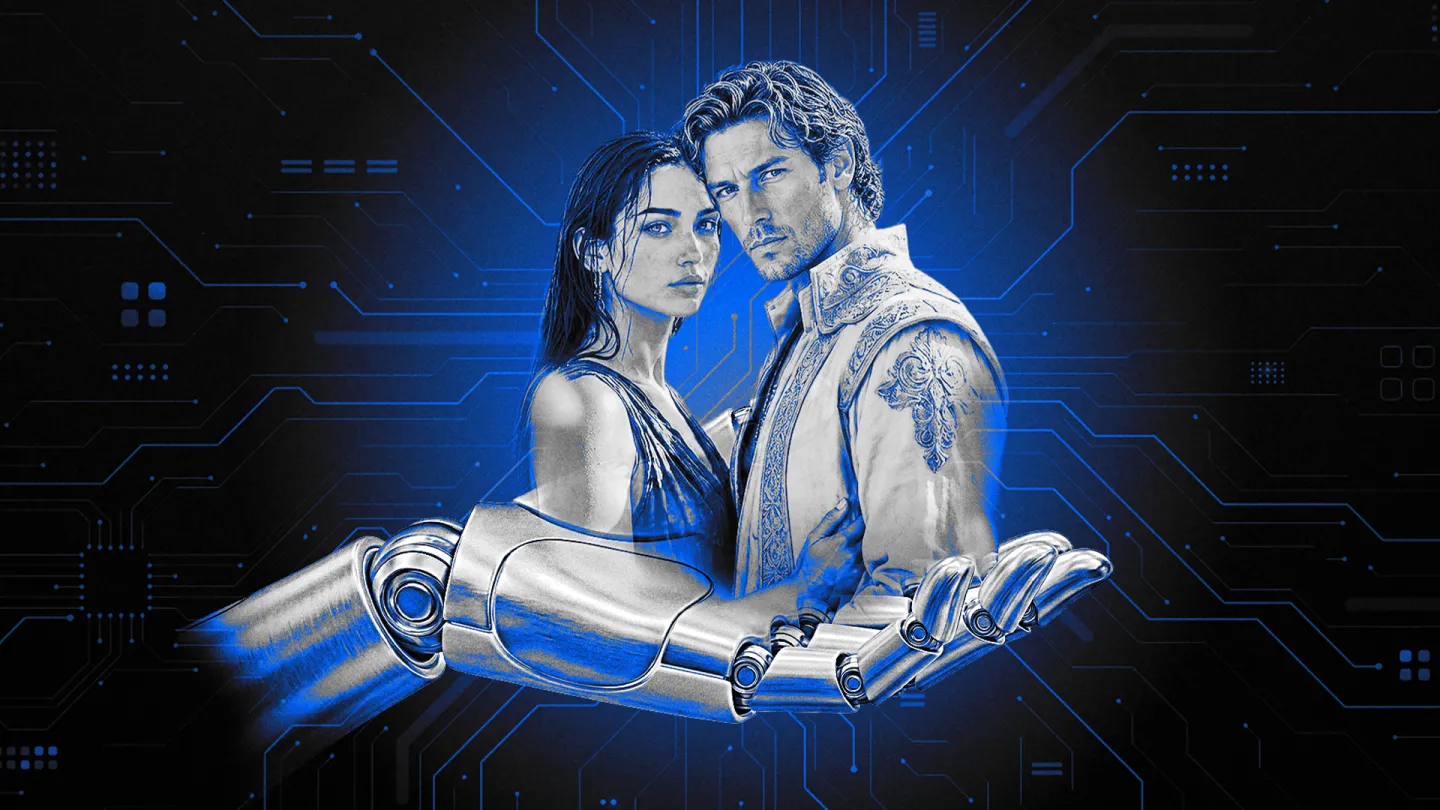
China pioneered the microdrama industry as we know it, with the duanju format exploding in popularity during the pandemic. So when AI-generated verticals began flooding the Chinese market and reports emerged that production workers were scared for their jobs, it was an ominous sign for the burgeoning industry in the U.S.
Read more Oscars: Australia Picks ‘First Light’ as International Feature Contender (Exclusive)
Now, it’s become clear that companies serving the American market are very much testing the appeal of these bite-sized, AI-generated stories. Not every firm is going the route of My Muse or Inkitt Ironblood, apps that exclusively release AI verticals, often fantasy, period and action stories that would require some serious budgets if they were filmed in live action. But some major players, including DramaBox, DramaWave and FlareFlow, have increasingly been embracing synthetic actors and settings and showering their apps with prompt-generated, sometimes uncanny fare, no human actors required.
For entertainment workers in the Los Angeles area, that shift has come with consequences. In the wake of the 2023 Hollywood strikes, verticals became a lifeline for cast and crew as traditional jobs evaporated. Now, L.A.-based microdrama workers tell The Hollywood Reporter that jobs in the once-reliable industry have become scarcer, while unscrupulous use of the tech on the work of creatives is on the rise.
It’s a tough pill to swallow for an underemployed Hollywood workforce that once saw the field as a job-saver. “People who’ve been working full-time in this space for years are going back to their day jobs, going home, and that’s cast, crew, producers,” says Candace Mizga, an actor in the vertical space and co-founder of the microdrama platform Chera TV, which does not use AI. “It has been a huge, huge jump, especially this past couple of months. It’s been pretty wild to see.”
It will come as no surprise that AI microdramas can individually be made cheaper, faster and with fewer workers. While budgets for live-action microdramas tend to fall in the $100,000 to $300,000 range, pro-looking, feature-length AI microdramas can cost $60,000 to $100,000, according to AI verticals production studio Axis AI Studios. (Think that’s a bargain? The app TrueShort has claimed its 20- to 30-minute AI projects can be made for as little as $1,000 to $3,000.) In terms of the production schedule, these projects can be completed in two weeks as compared to 12 weeks for a live-action story, per Holywater Tech, which owns the all-AI My Muse app.
And though a live-action shoot might require 50 workers for seven days, “now we would need five people for seven days to make one show,” says Guy Shimoni, the CEO and co-founder of the platform Shortical, which releases both live-action and AI verticals.
While microdrama firms have been dipping their toes into AI for some time, the release of the Seedance 2.0 AI video generator tool in February accelerated adoption of the tech, says Shimoni. Once Seedance 2.0 released, enabling that viral video of Brad Pitt and Tom Cruise fighting, “The technology was really there to tell a good story, a good narrative, the art effects weren’t too bad,” Shimoni says. “We all started adopting when Seedance 2.0 came out.”
While it’s unclear how much AI is to blame, microdrama insiders say work opportunities at large have recently been slowing. Maddie Grove, a talent manager at LEWK Management, has some 15 actor clients in the verticals space. “June hit and all of a sudden we went from having 15 to 20 different shows casting on breakdowns a day to maybe four,” she says, noting there has been a “significant drop” in employment opportunities. She’s not alone in seeing a larger change afoot. “Last year, I was getting anywhere between five to 15 vertical auditions a week,” says Chera TV co-founder and verticals actor Kylie Karson. “I would say I’m getting two a week [now].”
Other cases are more obviously tied to the embrace of the tech. Lucia Lopez is a production designer and director who for half a year worked with a production company in Atlanta to produce a microdrama a month for the platform DramaShorts. The production company’s contract with DramaShorts abruptly ended in July when the company went “fully AI.” She adds, “They don’t want anything as live action. And it was in the blink of an eye.” Now she’s back in L.A. and says outreach to producer contacts hasn’t yielded new work. THR has reached out to DramaShorts for comment.
“The sheer speed with which apps have basically shut down entire productions, completely pulled out, completely transitioned over to AI is quite spectacular,” says Jen Cooper, the founder of Vertical Drama Love, a media brand that closely tracks the industry.
Still, some companies claim they can create more employment opportunity through AI, not less. Shortical’s Shimoni, who notes that individual AI microdramas might use five employees instead of 50, says platforms can now make many more microdramas, rather than produce the same number with fewer people. He adds, “The business is more efficient. So actually we’re understaffed, we’re recruiting more, we’re missing people.”
Beyond employment concerns, the rise of AI microdramas has sparked issues for creatives around consent. Vertical actors including Ashley BeLoat and Evan Gambardella spoke to Business Insider in July about platforms allegedly using performances and likenesses from live-action microdramas in fully AI projects without human performers’ permission. The publication also reported on platforms allegedly posting sexualized ads for microdramas that used AI to engineer scenes and dialogue that were never filmed or cleared with the actors involved.
Some actors are now negotiating AI language into their contracts. But even for those who have written protections, the paperwork doesn’t always matter. Grove — who is BeLoat, Karson and Mizga’s manager — says that, since June, she’s seen platforms breach actors’ contracts four times when it comes to AI. Sometimes, platforms will hire a third-party ad company with which actors don’t have a contract; that company will “take many creative liberties that are overtly sexual, rage-baiting, clickbaity” for advertisements, Grove adds.
Lack of leverage may be one reason why this is happening — companies may bank on the idea that burgeoning performers aren’t going to raise a stink or bankroll expensive lawsuits. But unauthorized use of AI isn’t just impacting niche creatives in the vertical space. Vertical Drama Love’s Cooper and social media users have pointed to the visual similarities between characters in DramaWave’s The Rise of the Lycan Queen and DramaBox’s Deny Me, Dragon King and actor Henry Cavill’s character in The Witcher. Flowing white hair? Check. Broad shoulders? Check. Very square jaw and dark brow? Also check.
“I like to play a game of where is Henry,“ wrote one social-media user on Reddit. “Sometimes multiple characters look like him in one drama and they use his witcher voice a lot.” THR has reached out to representatives for Cavill, DramaWave and DramaBox for comment.
Unscrupulous use of AI can also affect screenwriters. Writer-actor Tess Dinerstein sold a pirate-themed microdrama script to DramaBox in 2025, before she says AI was on the radar of many companies in the U.S. market. Around the same time as she finished revisions for the drama in 2026, she remembers telling an exec that she wouldn’t like the script being made into an AI show. A few months later, that exec had exited the company, and Dinerstein learned that the show had been released as an AI project.
Dinerstein acknowledges that DramaBox owns the full rights to the script, but she won’t watch or publicize the adaptation because she doesn’t approve of it. “When I spend so much time on a script and fall in love with the characters and feel like it could be done really well with people, [the use of AI] takes a lot of the heart and soul out of the piece,” she says. THR has reached out to DramaBox for comment.
Where is all this headed? In China, more than 95 percent of microdrama titles in the first three months of 2026 were reportedly made using AI. Across the Pacific, viewer demand will ultimately determine whether AI verticals become a short-term curiosity or a staple of the format. “You have to remember whoever’s running this, they’re running numbers. They don’t care about your face, my face,” says actor Eli Jane, who has appeared in about 30 verticals. “If the audience doesn’t show up for AI, then they’re going to stop making that content.”
Worried about the AI invasion, actor Martina Monti — who has some 40 microdramas under her belt — began counting the number of vertical acting jobs posted on the digital casting platform Actors Access in seven-day samples across multiple months to determine if a slowdown was reflected there. (She says it was — Actors Access, which is a go-to platform for microdrama acting jobs, did not respond to a request for data for this story.)
Says the performer: “Some people have a more positive expectation for the future. They’re like, ‘Hey, we hope that this AI bubble is going to just pop.’ And other people, we don’t know.” She adds, “It’s not going well for now.”
This story appeared in the Sept. 9 issue of The Hollywood Reporter magazine. Click here to subscribe.