Anya Taylor-Joy on the Bittersweet ‘Lucky’ Finale and Why ‘Dune 3’ Exceeded Expectations
[This story contains major spoilers for Lucky’s series finale, “All Good Things.”]
Read more Chelsea Freeman Signs With The Team (Exclusive)
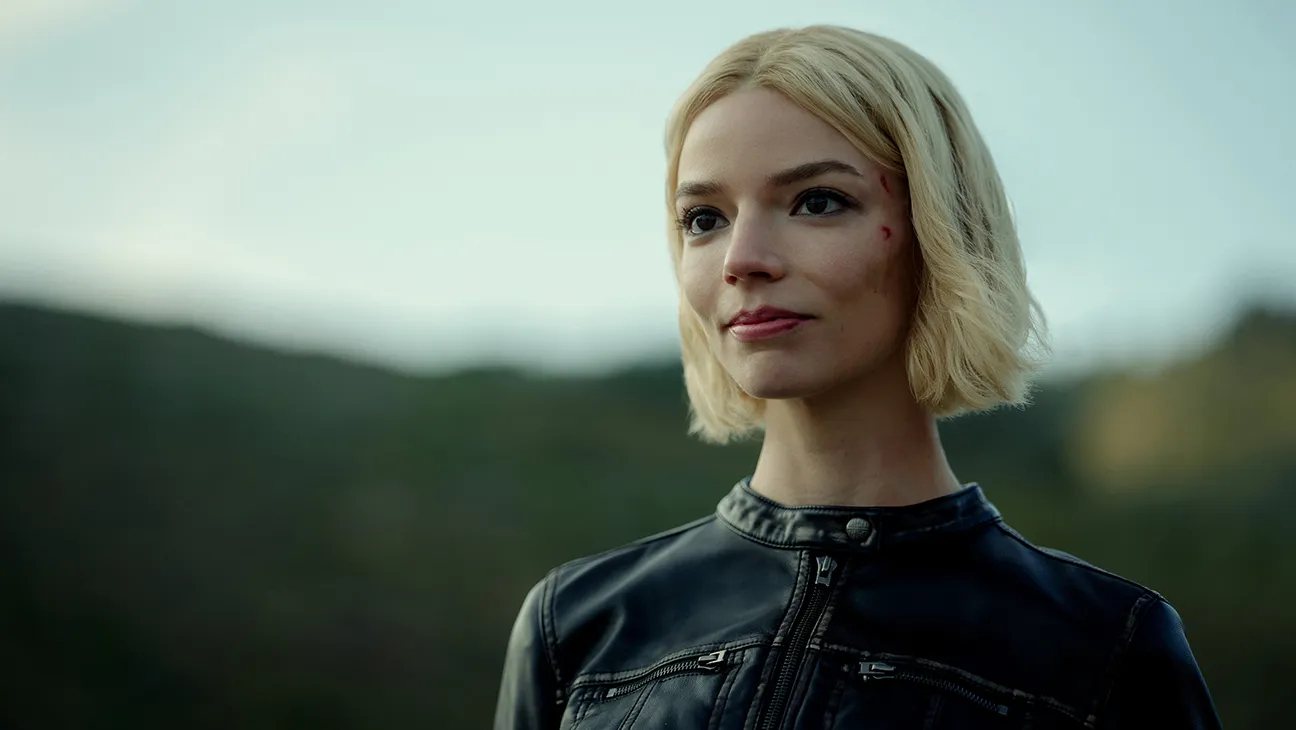
With the dust now settled on Lucky, Anya Taylor-Joy believes her eponymous character is finally living up to her nickname.
The British-Argentine actor’s point has less to do with her conflicted con artist cheating death numerous times and besting her mobster in-laws, as well as the FBI. Instead, it’s more about the bittersweet fact that, despite losing her husband Cary (Drew Starkey) in a fatal car chase — and ultimately severing ties with her father, John (Timothy Olyphant), a con man whose devotion to the hustle proved utterly incurable — she’s at long last able to chart her own course.
In the final moments of Apple TV’s latest well-received limited series, John comes to terms that his familial protege outmaneuvered his final play for the $10 million he originally skimmed from Cary’s parents, Annette Bening’s Priscilla and William Fichtner’s Wayne. Cary re-stole the money temporarily from Lucky and John, only to leave it for his wife to handle as she sees fit, something Priscilla co-signed after killing Wayne, the sadistic driving force behind the season-long attempt to recover it.
Lucky could’ve easily started a whole new life with the ill-gotten gains, but she opted to take her first steps toward a life free of crime by returning the repeatedly stolen taxpayer dollars to the Feds. The final images of the show find Lucky quietly fulfilling the promise her dad spent a lifetime breaking — that one day they would abandon their thieving ways, dig their toes into the sand and stare out at the Pacific.
“Either personally or through somebody close to us, we all know what it is to love somebody that’s not good for us. It’s a lesson that has to be learned individually, and the heartbreak of it all is so relatable to me,” Taylor-Joy tells The Hollywood Reporter. “You still feel that heartbreak because Timothy is so charming, and you so want him to do the right thing. But where we leave Lucky, she, for the first time, isn’t being told who she is; she’s telling other people who she is.”
Now that Lucky has been fully released, Taylor-Joy still has Denis Villeneuve’s Dune: Part Three coming out in December. Lead actor Timothée Chalamet recently showered her performance as Paul Atreides’s sister, Alia, with adjectives including “breathtaking, unbelievable, terrifying and amazing.” Taylor-Joy laid the groundwork for her trilogy-capping role by filming an Alia cameo in Dune: Part Two (2024) shortly after wrapping George Miller’s Furiosa: A Mad Max Saga.
Her Furiosa experience proved to be a frustrating one, and while she shared some of her struggles during her recent THR cover story, she has made clear she will keep the full, gory details private for decades. By contrast, her expectations for Dune: Part Three were wildly exceeded.
“Dune was everything that I hoped it would be. I cannot say more wonderful things about Denis [Villeneuve]. It was so deeply inspiring to be in these really harsh elements and know that every person is doing their absolute best work because they believe, trust and adore the person that’s leading the ship,” Taylor-Joy says. “In the future, I hope that I never get jaded and that I still have that childlike exuberance. When I look at Denis, I’m like, Oh, it’s possible.”
Below, during a conversation with THR, Taylor-Joy also discusses key changes made to Jonathan Tropper’s adaptation of Marissa Stapley’s novel Lucky, before revealing what made her first day on set acutely emotional.
***
As a graduate of Shyamalan Film School, you’ve always had an interest in the behind the scenes of it all, but what made Lucky the right time to actually venture into producing?
First and foremost, it was my first real opportunity. I’m so grateful to Reese [Witherspoon] and the whole Hello Sunshine team for that. It was her who read the book, reached out to me and said, “Hey, I would love to co-produce this with you if you’d be interested.” Then, upon reading the book, I really felt like I had something to offer and to contribute. So it just felt like the perfect storm.
Marissa Stapley wrote the book with you in mind. Did she get the ball rolling on your casting? Or were Reese and co. simultaneously thinking about you?
Apparently, it was simultaneous. Marissa told me about her manifestation during one of my last days on set, and I was just like, “Well done! Good witchery.”
You went from producers Reese Witherspoon and Lauren Neustadter on Lucky to Mary Parent and Tanya Lapointe on Dune: Part Three. Did you pocket as much as you could from them, especially now that you have a production company (LadyKiller)?
I always have curiosity and genuine interest. They are the most important things for me, and luckily, I don’t have to try to force it. If you’re genuinely interested in what’s going on, you learn so much by osmosis just because you’re present. People talk a lot about waiting around on set, but I love the waiting around because that’s just an opportunity for a side quest to learn something.
Lucky pockets anything and everything in a different way. When she walks in a room, she instantly clocks all the angles and identifies anything she can grab, be it keys, cash, clothes, whatever. She’s like Margot from The Menu in that respect.
Yeah.
Has your job made you pretty adept at reading a room since you always have to account for camera angles, blocking and your scene partners?
[M.] Night [Shyamalan] once described me as a raw nerve that has no skin. I’m very sensitive to energies, so I can read if somebody is having a bad day or if somebody needs reassurance in some way. I’m happy about that because I’d always rather see it than not see it.
Lucky’s con-man father, John (Timothy Olyphant), raised her to be his partner-in-crime, and she eventually surpassed his mastery. For curiosity’s sake, if you had to pull a confidence game in real life, do you think your acting chops would translate successfully?
The act of being a confidence artist requires a level of cynicism that I just do not have. I have interest in fun pranks where nobody really gets hurt, but I detest the idea of ever winning because of somebody else’s misfortune.
Lucky spends the first few episodes tracking down her husband Cary (Drew Starkey) after he made off with the $10 million that her dad originally stole from Cary’s gangster mother (Annette Bening) and estranged gangster father (William Fichtner). Eventually, she learns from Cary that he ditched her in order to protect her from his vengeful mother. Years earlier, Lucky worked with the Feds to put her in prison. Cary then dies from a gunshot wound during a car case, and that swerve was not a part of the source material. Do you remember the conversation around that choice?
Absolutely. We really wanted to center in on this relationship and why she goes to the ends of the earth to find him. The reality is both Cary and Lucky have inadvertently ended up with people that are slightly like their parents, and they feel like nobody else will understand. Cary commits such a treacherous act that we knew we needed an actor that was going to be intensely likable to be able to even hear him out. Then we thought, What’s the best possible lesson for Lucky to learn from this? Cary’s got to go. So it was quite ruthless, to be honest with you.
You and Drew Starkey probably didn’t work together that long, but you had a full relationship arc in that accelerated amount of time: the honeymoon phase, the breakup, the reconciliation and death.
Read more Charter Communications Completes Cox, Liberty Broadband Deals, Creating New Cable Powerhouse
Absolutely. Anytime Drew was on set, I joked that I was having the best time because I was clean and usually doing a flashback. Those flashbacks were happy, light-filled and joyful. And then the second he would leave, I would be bloody, running for my life and getting shot at. (Laughs.) So it was very dramatic whether Drew was there or not there. But he’s very easy, and we get along really well. He’s somebody that I wanted for the role immediately. Overall, I’m really proud to say that we got our first choice for each one of the roles.
Regarding the sleazy real estate agent character in episode three, I didn’t realize that your husband, Malcolm McRae, has been acting off and on since he was a kid. But given the icky place where the sequence ends up, did you partially want to cast someone who could make that uncomfortable dynamic more comfortable?
We cast all of our guest stars on the fly. We had all of our main cast, and then, as the episodes were going on, we opened casting for the other wonderful characters that we have in our show. Malcolm was doing a lot of self-tapes at the time. And if you’re receiving a Malcolm McRae self-tape, the voice at the other end of it is me, obviously. So I was just watching him one day, and I said, “Damn, you could be really good for this. Would you mind taping for it?” And he did. Afterwards I was like, “Wait a second, this really works out for me. Instead of having a stranger slobber all over me, I’d much rather it be the man that I’m in love with.”
In the end, Lucky, alongside her dad, manages to circumvent the FBI and the mob to walk away with the $10 million in crypto.
She’s a busy girl.
Granted, Priscilla did her a solid by honoring her deceased son’s wishes. And while Lucky fully anticipates her dad’s attempt to re-steal the money, it still hurts to see him choose the hustle over her yet again. But it’s a blessing in disguise, isn’t it? It needed to happen.
Either personally or through somebody close to us, we all know what it is to love somebody that’s not good for us. It’s a lesson that has to be learned individually. Somebody can’t tell you about it. You have to figure it out on your own, and the heartbreak of it all is so relatable to me. And you’re right, you still feel that heartbreak because Timothy is so charming and you so want him to do the right thing. But where we leave Lucky, she, for the first time, isn’t being told who she is; she’s telling other people who she is.
In episode four, she and a random guy at a bar toast over their bad luck. Ultimately, do you consider her lucky even though she’s completely alone and without the two people who loved her?
Anytime you have the opportunity to make your own fate, you’re pretty lucky. And she made it out alive. That’s pretty unbelievable [after all her brushes with death].
She says at one point in episode six that Lucky isn’t her real name. In the book, her real name is Julia Mann, because John is not her biological father in the book. But I think he is her biological father on the show, as he references the death of her mother and being left with this tiny human. So what does she mean when she says Lucky isn’t her real name? Is she just saying that Luciana is technically her real name? Or is there something more there like in the book?
No, I think it’s just that Luciana is her given birth name. Her father then gave her the nickname “Lucky,” both as a promise, but also selfishly. I really enjoyed playing that, because parent-children relationships are so deep and so treacherous and so beautiful all at the same time. There’s a huge element of Lucky that really wants to make her father proud, but the thing that makes him proud of her is the thing that she most dislikes about herself.
She returns the $10 million to the Feds. It was stolen from taxpayers in the first place. It’s admirable that she truly wants a clean break from her life of crime. But was there ever talk of having her repay some of her victims, such as the family out in the desert or the woman whose car accident she helped cause?
We had conversations very, very early on in the writers room. There’s this wonderful character in the book, Lucky’s childhood friend [Steph]. We loved her, and we really tried to bring her with us. But it ended up not really servicing the story in the way that we needed. [Writer’s Note: John and 10-year-old Lucky defraud Steph and her mother by claiming that Lucky is terminally ill, so I assume Taylor-Joy is alluding to a potential storyline in which Steph and/or her mother would’ve been made whole.]
So we thought about restitution, and then we just decided that the biggest score that she has to settle is with Aunjanue [Ellis-Taylor’s] FBI agent character, Rand.
Your THR cover story detailed some of the challenges you faced on Furiosa, so I’m not going to belabor that subject any further.
Thank you.
All I want to know is whether Dune: Part Three was everything you hoped it would be. Will you not have to wait 20 years to fully talk about it à la Furiosa?
(Laughs.) Dune: Part Three was everything that I hoped it would be. I cannot say more wonderful things about Denis [Villeneuve]. I learnt so much. I just wanted to be a sponge on that set and pick up everything in terms of the atmosphere and what it is to lead from a place of love. It was so deeply inspiring to be in these really harsh elements and know that every person is doing their absolute best work because they believe, trust and adore the person that’s leading the ship. He deeply loves it.
All of Denis’ actors strive to get him to say his catchphrase of, “I deeply love it,” after a take. Did you catch on to that game pretty quickly?
(Laughs.) Immediately, yeah. I have so much love and passion for this art form and this beautiful thing that I get to do. And when I think about myself in the future, I hope that I never get jaded and that I still have that childlike exuberance. So when I look at Denis, I’m like, Oh, it’s possible. You can get to this ultimate place and still just be a kid who wants to create these beautiful worlds and do it at such an amazing level of quality.
Are you about to head off to shoot The Lord of the Rings: The Hunt for Gollum?
I am leaving relatively soon for that side of the world [New Zealand], and I’m very excited about it. [This chat took place July 15.]
Lastly, you quoted Night earlier, and I still think about his famous note to you: “Don’t cry your tears, cry the character’s tears.” Did you ever catch yourself on Lucky crying your tears instead of Lucky’s tears?
Ooh, interesting. [Such crying] didn’t happen in front of the camera, but my dog passed away on our first day of filming, so that was hard. We were shooting all night long from 11:00 PM to 11:00 AM. And I think a big part of grief is being able to sleep through it. So it was such an interesting lesson of, Okay, you’re going to be awake. Your body is going to be pumping adrenaline the whole time. You have to find a way of making this okay and being a leader here because you can’t fall apart. And I’m actually really grateful for that experience.
***
Lucky is now streaming in its entirety on Apple TV. Read more of THR’s finale coverage.
Read more San Sebastian to Close With ‘Le Faux Soir,’ About Media Hack in Nazi-Occupied Belgium