‘At Night’ Features “Stories Women Share Together But Rarely to an Audience” (Exclusive Locarno Clip)
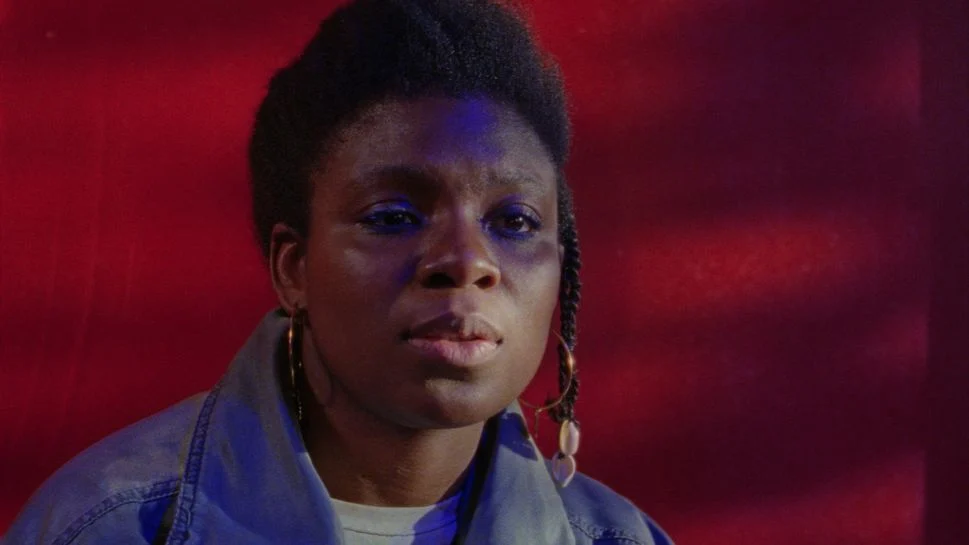
Six women roam the neon-lit city of Paris after dark. Over the course of a single night, their journeys intertwine reality, dreams and fiction. Whether at bus stops or corner shops, in restrooms or in bars, they give voice to their dreams, sexual desires and uncertainties about the future. Welcome to British filmmaker and artist Beatrice Gibson’s full-length feature debut, an experimental and “autofictional” film called, simply, At Night.
Read more ‘Alley Cats’ Review: Ricky Gervais’ Half-Crass, Half-Sappy, Mostly Unmemorable Netflix Cartoon
The movie will world premiere at the Locarno Film Festival on Saturday, Aug. 8, in the Filmmakers of the Present competition program of the Swiss fest’s 79th edition, which runs Aug. 5-15.
Written and directed by Gibson, At Night features cinematography by her long-time collaborator Ben Rivers and editing by Liyo Gong. The film is produced by Somesuch and Norte Productions.
“A filmmaker struggles to understand the film she is making,” a synopsis says about the women we meet in At Night. “A Black single mother refuses the categories imposed on her. A former sex worker reflects on her past. A poet gives up trying for a child.”
The film features an array of Gibson’s non-professional actor friends and influences as they discuss and explore such topics as sexuality, money, motherhood and mental health. “This isn’t simply a feminist story, but a love letter to friendships, relationships, and the quiet yet poignant stories women share together but rarely to an audience,” the press notes highlight.
A thread that runs through the movie is poetry, with U.S. poet Alice Notley reciting one of her own poems for the film, recorded just months before her death in 2025. Inspired by her writings and the texts of such other cult literary figures as June Jordan and Kathy Acker, Gibson takes us on nocturnal searches for answers.
“I was interested in the structure of the journey, of a woman just walking through the night,” explains Gibson. The idea for At Night came to her after she read two feminist takes on the epic quest narrative, namely Notley’s book-length poem, The Descent of Alette (1992) and Acker’s gender-flipped knight’s tale, Don Quixote, Which Was a Dream (1986).
Read more Meet Nicolaas Schmidt, the German Filmmaker Who Thinks “Plain Banality Is Stimulating as F***”
But scenes and narratives also emerged from the creative’s thinking about the kinds of encounters and conversations that can only take place at night. “Who really occupies the night? And what kinds of labor take place there?” she wondered. That is why At Night also features “undervalued work done by those who keep the city fed, clean, and moving,” according to the press notes.
“My casting process is one I’ve developed over time and is folded into the writing process. I don’t follow the traditional structure in which I’m writing and then casting,” Gibson explains. Instead, she casts her characters first, thinking about who might produce an interesting performance, and then collaborates with them to develop the material.
“It’s a collectively written film, in many ways,” Gibson emphasizes. “People write their own material for their scenes, depending on what they want to develop.” She concludes: “It’s autofiction really, so generating that material is a delicate and sensitive process, and it takes a lot of time and revision. People need to feel comfortable with what they’ve authored, where it’s placed and with whom it’s in dialogue. It’s quite a deep process.”
No surprise then that it took six years to make At Night.
As with all of Gibson’s work, the film emphasizes a working process that is collaborative and improvisatory. “I’m utopian at heart,” Gibson says. “I wanted to make a film about trying to be together at a time when everyone is divided. Maybe it was a naive and misguided thing to do, although, that said, I would do it again.”
That theme of being together also applies to Gibson appearing in front of the camera in At Night. As for her decision to do so, she says she felt a responsibility to delve into her own sense of privilege: “I didn’t realize the extent to which race and class would play out during the process. That’s why I’m in the film,” she explains. “I wasn’t supposed to be initially, but I felt I had to take responsibility somehow, in relation to my positionality. I come from a deeper place of privilege than most of the characters in the film; there was critical tension in that, and I felt like I had to take responsibility for it and explore it.”
The relationships and shared thoughts, as well as the sights, sounds and rhythm of the film, are what At Night is really all about. You can watch an exclusive clip for the film, which THR can premiere, right here:
Read more ‘Brady vs. Manning’: Documentary Film in the Works About NFL Rivalry (Exclusive)