New York Sees Film and TV Spend Surge, California Halts Exodus For Now
New York and New Jersey are on a roll. Both states have made gains in the race to nab Hollywood movie and TV spending for on-location shoots. California, meanwhile, has upped the ante with a doubled incentive program that is attempting to halt production flight to more attractive tax locales — and that triage effort appears to be working.
Read more England vs. Argentina Livestream: Where to Watch World Cup Semifinal Match Online
The Golden State stayed No. 1 overall with $1.33 billion in production spend that inched up 5 percent year-over-year as filming count grew by 11 percent, industry tracker ProdPro reported in its Q2 2026 snapshot released on Wednesday. That bucked declining filming activity as recently as the first quarter of this year in California. That’s the good news for Gov. Gavin Newsom and the state’s film office, led by the outgoing Colleen Bell.
Additionally, California is also seeing a rise in what’s deemed committed spend, defined as estimated production budget for projects that start shooting in the quarter.
“It’s only one quarter, but combined with what we saw in Q1, we think it’s an early sign that the expanded incentive is bringing more productions back to the state than we saw throughout 2025,” Alex LoVerde, co-founder and CEO at ProdPro, tells The Hollywood Reporter. “Incentives are just one factor in where productions choose to film, but the early data suggests California is beginning to regain momentum.”
Yet its East coast rivals are also gaining steam with larger year-over-year spending increases. New York has bulked up its incentives to Hollywood, removing the cap last year on above the line qualified spending, among other efforts. That has fueled a resurgence in the Empire State, which saw a 19 percent increase in filming count and a 57 percent surge in total production spend to nearly $1.06 billion in the second quarter of this year, per ProdPro.
That’s important given the amount of investment in the state that has gone to the soundstage space. “New York Tri-State’s soundstage inventory has grown 43 percent since 2020,” concluded a study from real estate services giant CBRE in June, which added: “Motion picture employment stands at 86 percent of pre-pandemic levels, with Manhattan and the Hudson Valley leading the rebound.”
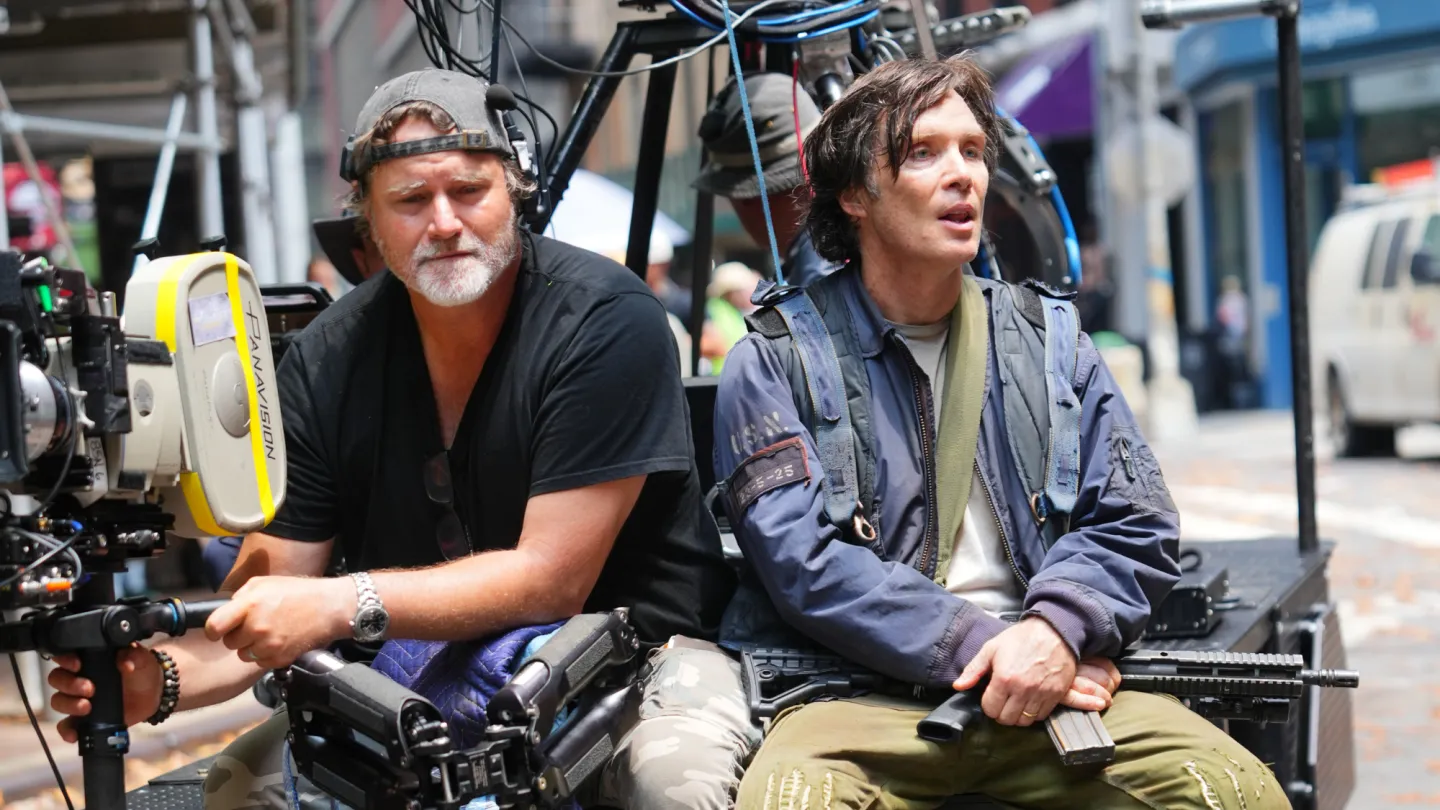
In the City itself, soundstage complex Sunset Pier 94 Studios opened this year (with Dexter: Resurrection as its first TV series tenant) while titles like Paramount sequel A Quiet Place III recently took over streets for principal photography in June.
Read more Liam Neeson Goes on the Run in Fast-Paced ‘The Mongoose’ Trailer
Meanwhile just across the Hudson River, New Jersey saw a decline in total filming activity (down 11 percent year-over-year) but a major increase production spend (up 41 percent) to $387 million for the quarter. That discrepancy is attributed to a dip in feature film starts in the quarter but a rise in episodic TV filming in the state. One ironic example: CBS’ upcoming Silicon Valley legal drama Cupertino, named after the California city, is shooting in New Jersey.
The state has benefitted by formally designating Netflix, Paramount and Lionsgate as studio partners, which have conferred a series of incentives to those companies over the long haul to produce titles there. Netflix is building its East coast soundstage base at the former site of Fort Monmouth, New Jersey. Paramount signed a 10-year lease in October to occupy the in-development 1888 Studios just across from New York City in Bayonne, while Lionsgate is planned as the anchor tenant of Great Point Studios in Newark.
On the other side of the haves and have-nots equation, states that had been on the upswing as far as production spending and activity only a few years ago have seen dips this quarter, including in Georgia, New Mexico and Illinois.
Notably, Georgia, which was once a base for Marvel projects (which have decamped to the U.K.), saw a 40 percent decline in filming activity and a 43 percent decline in production spend in the quarter. The state had slipped below New Jersey in the fourth quarter of last year in terms of total spend and in the second quarter the states are within $20 million of each other in spend. The declines in Georgia are across both episodic and live-action features.
“The most competitive incentive programs all have the same characteristics,” says ProdPro chief LoVerde. “They offer a meaningful credit, enough funding that producers know they’ll actually get it, credits that are easy to monetize, a fast path to payment, and consistency from year to year. At the end of the day, producers are trying to reduce risk. The easier and more predictable a program is to use, the more competitive it becomes.”
The exec adds, “Of course, incentives are only part of the equation. You still need experienced crews, infrastructure, great locations, and a place where talent wants to work. But when productions are choosing between otherwise comparable markets, the incentive often becomes the deciding factor.”
Read more Danny McBride to Direct G.I. Joe Movie for Paramount