As Live Shopping Blows Up, It’s a Bidding War for Auction-Fluencers
Taylor Lally is a blue-eyed, burly, bespectacled man, with a beard about halfway to the the full Duck Dynasty look. And just past midnight on a Monday evening this summer, he’s hawking candy bars inside a purple-painted room no bigger than 300 square feet, with a disco ball hanging from the ceiling.
Read more Where to Watch ‘It’s Always Sunny in Philadelphia’ Season 18 Online
It’s not exactly Willy Wonka and the Chocolate Factory. The thirty-something is an online auction maestro, broadcasting to a few dozen people competing to buy confections with the swipe of a finger. Mini auctions like this one on WhatNot, the liveshopping app, will help Lally cross one million dollars in sales this year, he said.
“We’re live for about four hours, but we’re here prepping for maybe four hours before and maybe two to four hours after,” he tells THR. “So we’re putting in like 12- to 16-hour days.”
Lally began selling sweets on WhatNot last year, offering customers $20 boxes where they could pick individual candy items to buy. He nearly shut down the account because it didn’t yield enough money to justify the time he spent on the platform. But around six months ago, another WhatNot seller reached out with advice: try ultra-fast, single-item auctions. “This kind of totally changed how we do business,” he says.
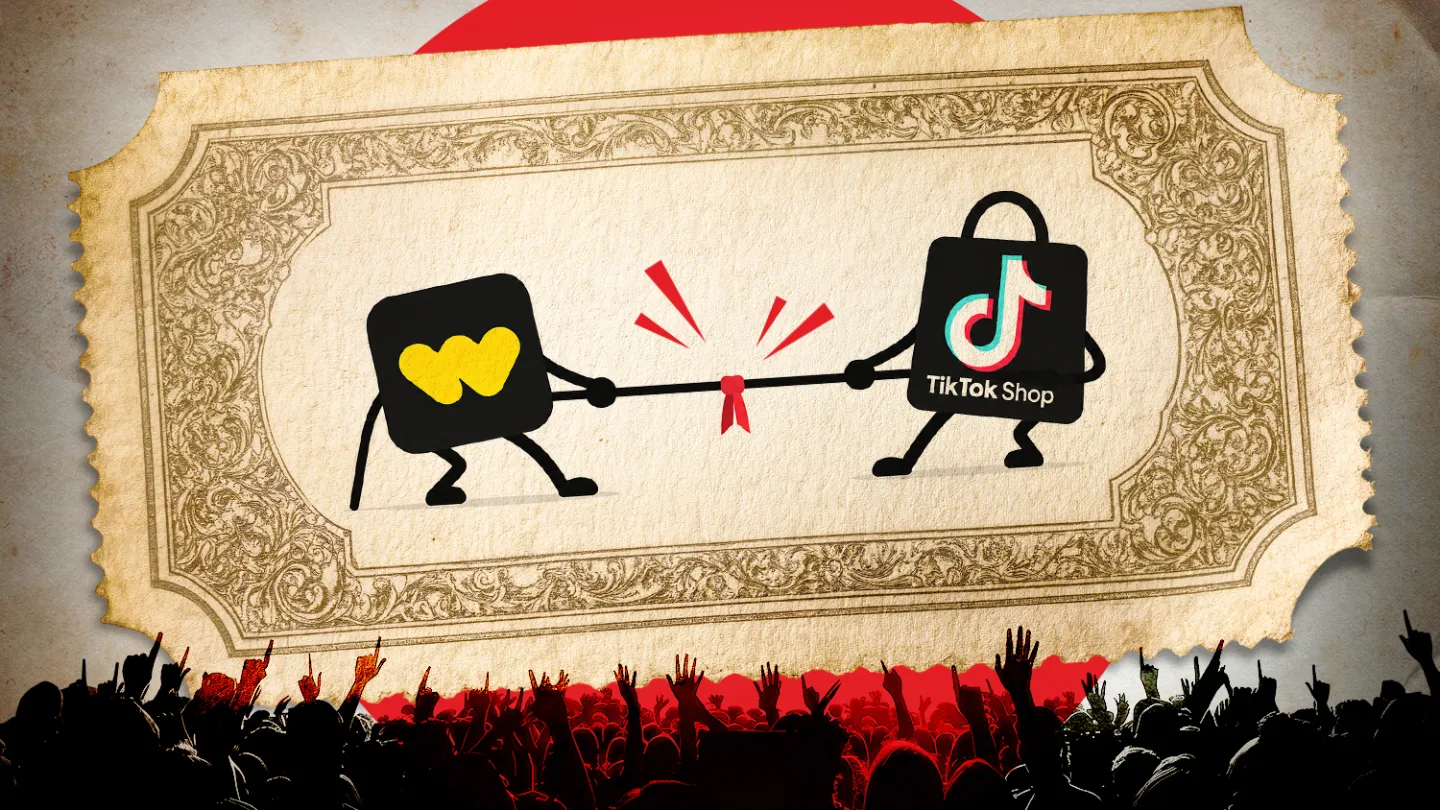
WhatNot and other live shopping retailers are shedding their reputations as purveyors of baseball cards by expanding their digital aisles, benefitting niche auction-fluencers like Lally. In July, WhatNot — which continues to add new verticals like food and golf — raised hundreds of millions of dollars at a $20 billion valuation. Despite WhatNot’s first-mover advantage, a formidable rival has emerged in TikTok Shop, which allows sellers to go live and reach the app’s 100 million-plus user base.
Ashley Christenson, a livestreaming consultant, says Gen Zers are increasingly using TikTok to search for products, making it an attractive selling channel for retailers and a lucrative business for the social media giant. “The fact that now they can do that as a live experience is a natural evolution that makes a ton of sense for TikTok,” she says.
The evolution of live shopping from infomercial-like marathons to fast-paced micro sales has sparked bidding wars, so to speak, over popular auction-fluencers. TikTok representatives reached out to Lally and met with the creator multiple times, hoping to woo him to their WhatNot competitor. Joining another platform is something Lally will entertain because of WhatNot’s fee structure. “A big deal about WhatNot, which we can’t really get around, is a thirty-cent transaction fee, regardless of what we sell,” Lally says. “So it’s just negotiating those terms with TikTok.”
WhatNot’s bidding process — seconds-long auctions with more time added if customers bid — is now standard across other platforms like TikTok Shop. Many sellers start their auctions at $1 as a way to hook prospective bidders. “If you start something that’s $1 but it’s actually worth $50, people aren’t asking themselves, ‘Should I buy it?’ They’re asking themselves, ‘What am I willing to spend on it?’” said Kip Roland, a liveshopping seller and advisor.
Read more ‘60 Minutes’ Adds The New Yorker’s Ariel Levy as CBS Series Keeps Staffing Up
Josh Luber, a co-founder of the online sneaker seller StockX, believes more retailers are poised to spin up live commerce platforms. But one company, he said, has a massive edge. “Ultimately, all marketplaces live and die on liquidity, and TikTok is going to have the most liquidity from day one,” he said. “It’s a question of can they convert them over to be consumers.”
TikTok’s massive audience helped Roland reach 40,000 viewers when he decided to sell World Cup jerseys in June. Even though his account has only a smidge more than 13,000 followers, the social media behemoth boosted the auction to other TikTokers. “The algorithm recognized that people were staying for a long time, they were converting to buyers, they were engaging, and so it just pushed it to more and more and more people,” he says.
For buyers, live shopping is more conducive to impulse buys — a Blu-Ray DVD or Pokémon trading card — than with more thoughtful purchases. But that doesn’t mean every livestream involves low-ticket items. On Super Bowl Sunday, Jimmy Donaldson, a.k.a. Mr. Beast, went live on WhatNot as part of a partnership with the company and gave away items like a Birkin bag and a Lamborghini. “Anytime Jimmy’s paying attention and testing something, it’s worth looking at,” says Christenson.
Many live shopping creators prefer to narrate auctions behind the camera as opposed to becoming on-air hosts like Mr. Beast. But in a recent survey commissioned by Adobe, 30 percent of live shoppers said their purchasing decisions were driven in part by the identity of the host. Lally is doubling down on adding human faces to the mix by hiring another host for his account to fill more hours of the day. And earlier this year, eBay built a service for camera-shy sellers to hire livestream hosts.
Despite big growth, it’s still early days for live shopping in the United States. WhatNot says it sold $8 billion worth of goods in 2025, but total e-commerce sales in America topped $1.3 trillion, according to data from the U.S. Census Bureau. Meanwhile, Chinese buyers spend hundreds of billions of dollars annually on live shopping.
As more buyers embrace live shopping, Christenson expects more creators to market goods as a way to make additional income. Their social media skills often make them natural salespeople. “They can talk to a chat, and entertain, and make people feel something,” she says. “Whether they’ve got five viewers or 500, they have the potential to sell something while live.”
Read more Theo Von Takes Break From Field of Dreams Game to Talk Road Trips, Staying Healthy And Loving Iowa