‘The Beast in Me’ Showrunner Knows That the Violent Murder Scene Was a “Potential Tune-Out Point” For Some Viewers
The Beast in Me showrunner Howard Gordon knows there was one scene in the Netflix limited series that was divisive because of its brutality. “There were people for whom that was a potential tune-out point. Maybe some others tuned in extra because of it. It’s hard to tell,” Gordon, producer of 24 and Homeland, tells THR.
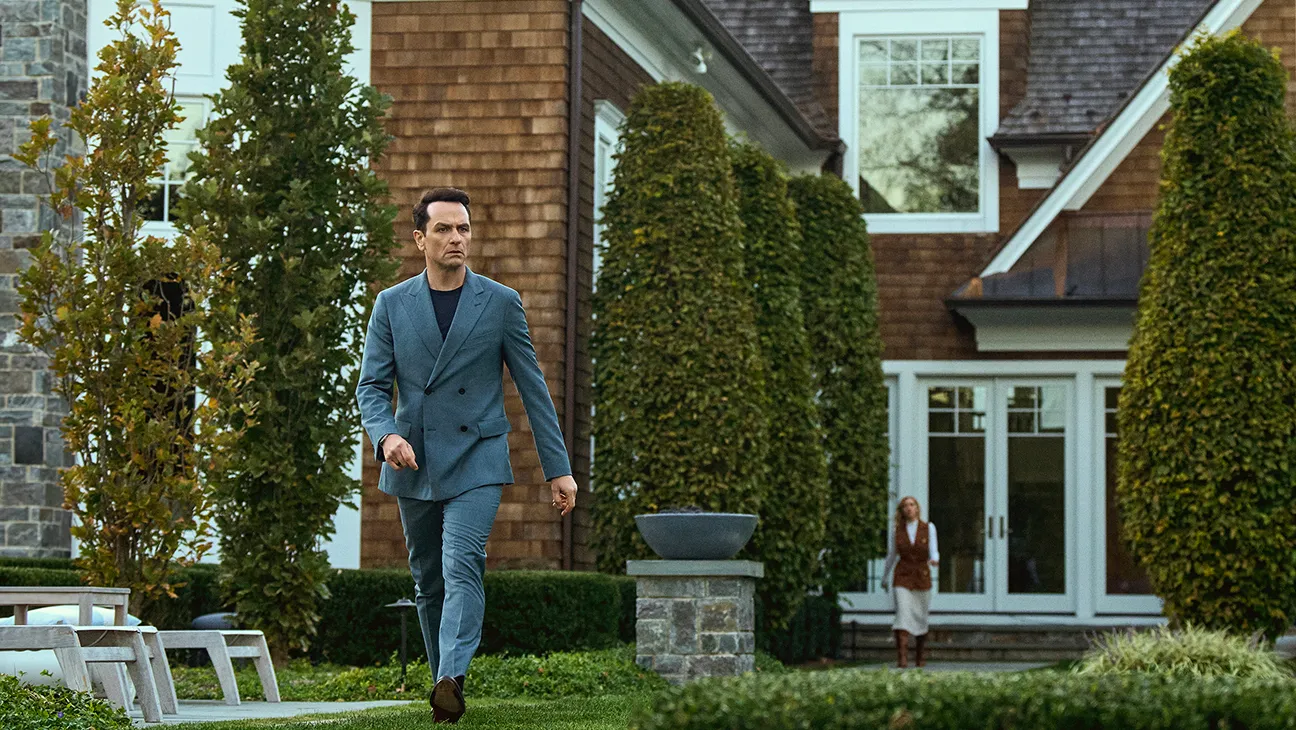
The scene in question is — spoiler alert — the flashback scene in which Nile Jarvis’ (Matthew Rhys) wife, Madison (Leila George), is violently killed. The moment answers the question the entire show sets up, and the question Claire Danes’ character, Aggie, who is grappling with the death of her son, tries to answer while writing a book about her mysterious neighbor: Did he or didn’t he kill his wife?
Gordon breaks down with THR why The Beast in Me was a hard premise to tackle and why Rhys was the right guy to play Nile.
I know Gabe Rotter wrote this six or seven years ago, and it took a while to gain momentum. Why do you think it was such a difficult premise to get moving?
A couple things. I think the secret of the pilot and Gabe’s creation is a character who is a writer [Danes], who is stuck really in this existential kind of “stuckness” because of this terrible loss. Those things were very evident in the premise.
But when she has a killer move in next door, or someone she suspects to be that, and writes this book … writing a book about somebody is a pretty static idea, so we had to find the dramatics of what happens. What does that cat-and-mouse actually look like?
Nile in the earlier version was kind of exiled to the suburbs but was painting. These two solitary characters who don’t have a lot of people around them, that’s not a very dramatic premise. It’s a very challenging premise. So we gave Nile [the real estate development] Jarvis Yards. He has still been exiled, but he still has a very important hand in a very big, controversial development. And who is his father? And Aggie’s relationship had to be explored. There were a lot of balls in the air, but what was evident to us was this essential loss, this essential grief, which is the most unimaginable thing any of us can go through and that universal fact of loss and how it can bend us. But there were too many multiple traumas and trauma swappings that wound up obscuring the issues. So most of it was about clearing the brush and finding the story.
Before the final reveal, the audience is constantly left wondering whether Nile did it or didn’t. How did you keep it in the gray zone?
The journey of whether he is or isn’t [a killer] … keeping that possibility open [was important], but ultimately we have to also look at the audience’s awareness of: If he wasn’t, where would the story go? We planted certain flags at various points.
Part of the other problem was that there were these backstories of Aggie’s own loss, of Nile’s previous marriage and that unsolved mystery. So there’s a lot of backstory, which, you don’t want to be reading headlines for an entire eight episodes. So you have to bring the backstory into the present and keep it alive.
Read more Hollywood Flashback: When Dudley Moore Intoxicated Audiences in ‘Arthur’
When you ask what the storytelling challenge was, the idea of a guy who you meet, and at the end of the pilot, you’ve now whispered your darkest secret to him [that Aggie wished her son’s killer was dead], and then that darkest secret becomes enacted makes very little sense. I mean, what was he hoping to achieve here by doing that? Only when refracted through the prism of a sociopath can you answer that question. So when you’re looking for rational cause and effect within the parameters of a healthy human being with a conscience, you’re not going to find very many answers there. You have to embrace the sociopathy in that way.
As for how we did it: As a showrunner, you really take the temperature of the people who are readers and your fellow writers and your actors. How do you keep people leaning forward and wanting to watch the next episode?
What did you see in Matthew for this incredibly complex, terrifying role?
We had high expectations, but he blew them away. I will say that the character of Nile Jarvis was the hardest to figure out and decode. The language of a sociopath is very easy to have a mustached, twirly guy speaking and pontificating and vaguely threatening tropes, but to really give him a kind of humanity, vulnerability. … I think Matthew’s secret was not just to make him charming, but to make him, by turns, dangerous and vulnerable. So he took the music that we gave him and just made it better. He’s a charming guy, so you bring that kind of charm to bear on a character as ruthless and damaged as Nile.
And look, this is an improbable love affair. What was also interesting was to have a love affair and to take sex out of the equation really made it great, made it so much fun, and these are two people who are uncomfortably alike who find each other and actually connect in a way. But then with that love comes the inevitable betrayal that he feels once Aggie, his new friend, turns out to be after him.
The eventual murder scene is very violent. Where do you draw the line in how graphic you want to go with scenes like this?
I tended to be the grandpa in the production. I have to bring [executive producer] Antonio Campos into this equation. Antonio obviously was the captain of the ship on the set, but he really was an active producer as well, so there is a sort of rough democracy. Being the showrunner, I got to cast the winning vote often, but I do hear it when I’m outvoted.
In instances like that, where I felt it was, “Whoa,” where I was a little squeamish, you have to just embrace that this is a really violent moment, and this is a very broken, evil, awful person. And you may as well go all in — in for a dime, in for a dollar. A lot of it is seasoned to taste, and I think there were people for whom that was a potential tune-out point. Maybe some people tuned in extra because of it. It’s hard to tell. At the end of the day, you have to be the sort of lightning-rod litmus test for your audience. That really felt like it was consistent with the tone and the texture.
This story first appeared in an August stand-alone issue of The Hollywood Reporter magazine. To receive the magazine, click here to subscribe.