The Power Broker Behind ‘Crazy Rich Asians’ and ‘Parasite’ Wants to Build a Hollywood Studio for Asian Stories
Having a conversation with Gold House founder Bing Chen isn’t terribly dissimilar from taking an amphetamine.
Read more Netflix’s Next Big Premiere Is an “Extended Look” at ‘Grand Theft Auto VI’
In what feels like a single breath, he’ll jump from the early machinations behind the creator economy to the exemplary world-building of the Pokémon universe to the virtues of The Cheesecake Factory’s tome-like menu. You end up retaining a large amount of information in a short period of time, and, while you might not be sure how you ended up here, you do know that you had a good time getting there.
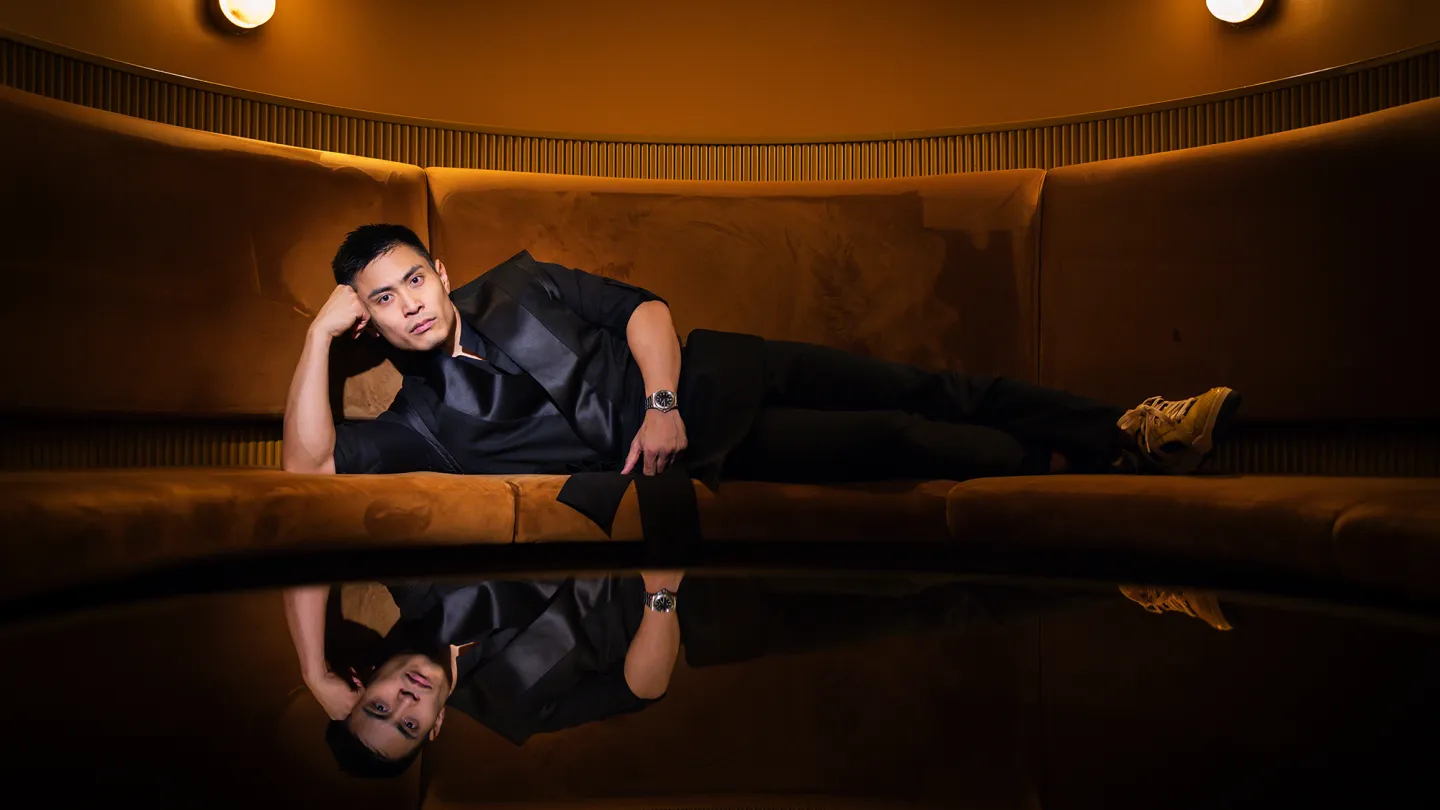
Chen, 38, isn’t an agent, an executive or — at least until very recently — a producer. Yet over the past eight years, he has become an influential behind-the-scenes figure in Hollywood through Gold House, the organization he founded in 2017 to expand Asian, Asian American and Pacific Islander influence across entertainment, business and beyond. The company has rallied support for films including Crazy Rich Asians, Parasite and Everything Everywhere All at Once; advised studios on projects involving Asian characters, stories and talent; invested in companies founded by Asian and Pacific Islander entrepreneurs; and built a network connecting filmmakers, executives, investors and stars. And now, with the launch of Gold House Studios, Chen is moving from helping other people get their work made to producing films and television himself.
“All movements need an entity to point to so they know it’s reliable, and that’s what really pushed [Gold House] into becoming a thing. I really resisted for, like, over a year,” says Chen. “I don’t even remember when we thought, ‘We need to actually formalize this,’ but the thing that pushed us into the light is a really high volume of calls from all the studios that were like, ‘You can make things successful.’ ”
Equal parts deeply ambitious and relentlessly earnest, Chen is the type of person who is entirely comfortable telling you his childhood heroes were Walt Disney, Martin Luther King Jr. and Mother Teresa, in no particular order. He also happens to look like someone Hollywood would happily put onscreen — with an abdomen he displays on social media. His brand of networking involves an exhausting degree of personal attention. He introduces people, follows up, proposes dinners, sends more names, applies pressure then follows up again.
“It’s overwhelming,” says director Jon M. Chu, a longtime friend and collaborator. “Your bullshit meter goes up right away, like, ‘This guy is not real, he is full of shit.’ And then five years later, six years later, 10 years later, you’re like, ‘Wait, it’s all genuine.’ “
On a particularly warm evening in mid-May, downtown L.A.’s Dorothy Chandler Pavilion, the former longtime home of the Academy Awards, glows in shades of yellow and gold for the fifth annual Gold Gala.
The event, created by Gold House to honor achievement in the Asian and Pacific Islander community, has acquired the inevitable nickname the “Asian Met Gala,” though unlike the actual Met Gala, the food is good. James Beard Award-winning chef Justin Pichetrungsi from L.A. favorite Anajak Thai is catering. The gift bag comes inside a Dagne Dover weekender stuffed with goodies including Marriott Gold status. Priyanka Chopra Jonas, Mindy Kaling, Charles Melton and Jet Li mingle inside. Saturday Night Live breakout Bowen Yang opens the evening by teasing Chen about his dating life. (Chen is bisexual, although only “on paper, not in practice, anymore,” he says with a laugh.)
Watching Chen work the room, you can see up close his nearly superhuman talent for networking. He isn’t really hosting the gala so much as conducting traffic. A filmmaker gets introduced to an investor. An actor to a showrunner. Somebody waves Chen over from across the room. Somebody else grabs him before he gets there. Every conversation seems to end with another introduction.
The introductions, of course, are kind of the entire point. Gold House markets movies, advises studios, invests in startups and now produces films and television. But underneath those increasingly varied divisions is a very analog Hollywood idea: Get the right people together so that they can actually make something.
The irony is that Chen didn’t learn this in Hollywood.
After graduating from the University of Pennsylvania, Chen joined YouTube during the Great Recession. At the time, he says, the company believed its future lay in licensed programming and video rentals. Its creator program — the small corner of the business devoted to users making original videos — was still experimental enough that when Chen became one of its managers, he found himself with an unusual amount of freedom.
Today, Hollywood agencies, studios and streamers are tripping over themselves to sign digital talent. Fifteen years ago, YouTubers were mostly seen as hobbyists making videos in their bedrooms. They had audiences, to be sure. But what they lacked was legitimacy.
Even then, Chen understood the power of promotion. “We needed our Oscars,” Chen recalls thinking. He persuaded YouTube to invest $250,000 in VidCon, then a struggling Anaheim conference devoted to online creators. Borrowing from the music industry and its framed gold records, he also helped launch YouTube’s Gold Play Button, awarded to creators whose channels reached 1 million subscribers.
“That’s really what made me from a business standpoint,” he says of the YouTube creator initiatives. “You had a 25-year-old leading what became a $400 million and then $1.5 billion effort.” By 27, Chen had landed on Forbes‘ 30 Under 30 list alongside Ryan Coogler and Lena Dunham. His career appeared to be writing itself. Instead, he decided to leave.
“I was like, ‘I can stay here and do the exact same thing, get paid more money, or I can grow and build my own thing,’ ” he says. “And the goal was always to build my own thing.”
For two years, Chen traded Silicon Valley for an Orange County area Peet’s Coffee, where the former creative writing major spent 14-hour days working on a 12-part sci-fi fantasy sagawhile living with his mother, herself a former CFO. He still describes it as the happiest period of his life.
Read more 2026 FIFA World Cup Helps Fox Score a Huge Quarter
But while Chen was writing fiction, friends across technology and entertainment kept pulling him into another conversation. Asian Americans were increasingly building companies, leading businesses and creating enormous economic value, they argued, yet remained dramatically underrepresented in Hollywood and in the stories it chose to tell.
Those conversations reached a crescendo as Chu, an old friend of Chen’s, prepared to release Crazy Rich Asians, Hollywood’s first studio film in 25 years with a majority Asian cast. Chu first met Chen years earlier, when the director was making videos for YouTube and Chen worked there. As Chen tended to do, he stayed in touch. “He’s like, ‘You’ve got to talk to this person. You’ve got to talk to this person,’ ” Chu says, laughing. ” ‘Bro, I can’t talk to all these people!’ You think maybe one year his energy is going to go down. But he loves it.”
As Crazy Rich Asians approached its release, the filmmakers feared the movie would become a referendum. If it failed in the eyes of the industry, then Hollywood would conclude there simply wasn’t a large audience for films led by Asian casts, putting other projects already in development at the time, like Marvel’s Shang-Chi and the Legend of the Ten Rings, at risk.
“It was very clear the tracking was not huge,” Chu says. “Not terrible, but not anything likely to make any difference.”
Chen did what he has spent much of his career doing: He convened people. He gathered entertainment professionals and founders and executives from YouTube, Twitch and Hulu at Chef Chu’s, the Palo Alto restaurant owned by Chu’s father. Over a multicourse dinner, the conversation shifted to strategy.
He began calling on his wealthy friends and business leaders, urging them to fund theater buyouts and bulk ticket purchases. “We went to all of our millionaire and billionaire friends, ‘All of you say this is important. If you don’t give me at least $5,000 to $50,000, then you don’t care.’ ” To encourage more donations, Chen and his collaborators created special posters for the screenings (because you should never underestimate people’s desire to see their names in print) and recruited online creators, artists and musicians to host them, then packed theaters with fans, tastemakers and awards voters.
The goal wasn’t simply to sell tickets. It was to create the sense that Crazy Rich Asians was an event Hollywood couldn’t afford to ignore.
The strategy worked. Crazy Rich Asians opened to $35 million over its five-day holiday weekend and grossed more than $240 million worldwide. Studios soon began calling Chen for help with other projects, including future best picture winners Parasite and Everything Everywhere All at Once. What began as an improvised campaign around a single film evolved into Gold House, which built a cultural consulting practice alongside a marketing and promotions arm, advising companies including A24, Lucasfilm and Pixar on everything from script development to product placement.
As Gold House grew, so did Chen’s ambitions. In 2022, the organization launched Gold House Ventures, a $30 million investment fund backed by founders of DoorDash, Credit Karma and Bain & Co, among others, which has invested in companies ranging from telemedicine to direct-to-consumer instant ramen. Gold House dinners began generating their own Hollywood lore, and not just for the star power they can draw (Zendaya and Tom Holland attended a recent dinner honoring Spider-Man: Brand New Day director Destin Daniel Cretton). At another party, Beef creator Lee Sung Jin met Charles Melton, whom he later cast in the second season of the Netflix series, which has since earned them each an Emmy nomination.
Even at a time when the larger industry has pulled back on its DEI efforts — shuttering departments and pipelines programs and scrubbing mentions of “diversity” from regulatory filings — Gold House has continued. Says Chen, “While the broader industry spent the past few years playing defense, correcting or, in some cases, treating inclusive strategies as a compliance checklist, we went on the offense. For us, playing offense didn’t mean being provocative for its own sake; it meant doubling down on the market realities.”
Gold House had already begun experimenting with production through its creative equity fund, which helped finance independent films including Sundance breakout Dìdi. Earlier this year, the organization executive produced and financed Laufey’s “Madwoman” music video, bringing together Olympic gold medalist Alysa Liu and Heated Rivalry star Hudson Williams. As of publication, the video has earned more than 21 million views on YouTube.
Building a studio was a natural next step, a way for Chen to guide IP and get involved with projects at the idea stage rather than joining midway through. “The real impetus of doing this was because we’ve been asked by a lot of filmmakers,” he says. “It’s been really flattering, to be honest.”
Gold House Studios’ initial slate reflects the breadth of Chen’s interests: a road trip dramedy, a martial arts adventure film, a horror series from Legends of Tomorrow writer Keto Shimizu and a movie based on the cult Japanese video game Slitterhead.
Eventually, though, there may also be room for an adaptation of a much more personal nature, one that Chen has been quietly working on for years: that book series he spent all those hours tapping away on — and that he still noodles around with on weekends, albeit no longer at a Peet’s Coffee.
No doubt he knows just the right people to make it happen.
Nicole Fell contributed to this report.
This story appeared in the Aug. 5 issue of The Hollywood Reporter magazine. Click here to subscribe.
Read more U.K. Competition Watchdog Approves Paramount-Warner Bros. Discovery Mega-Deal